
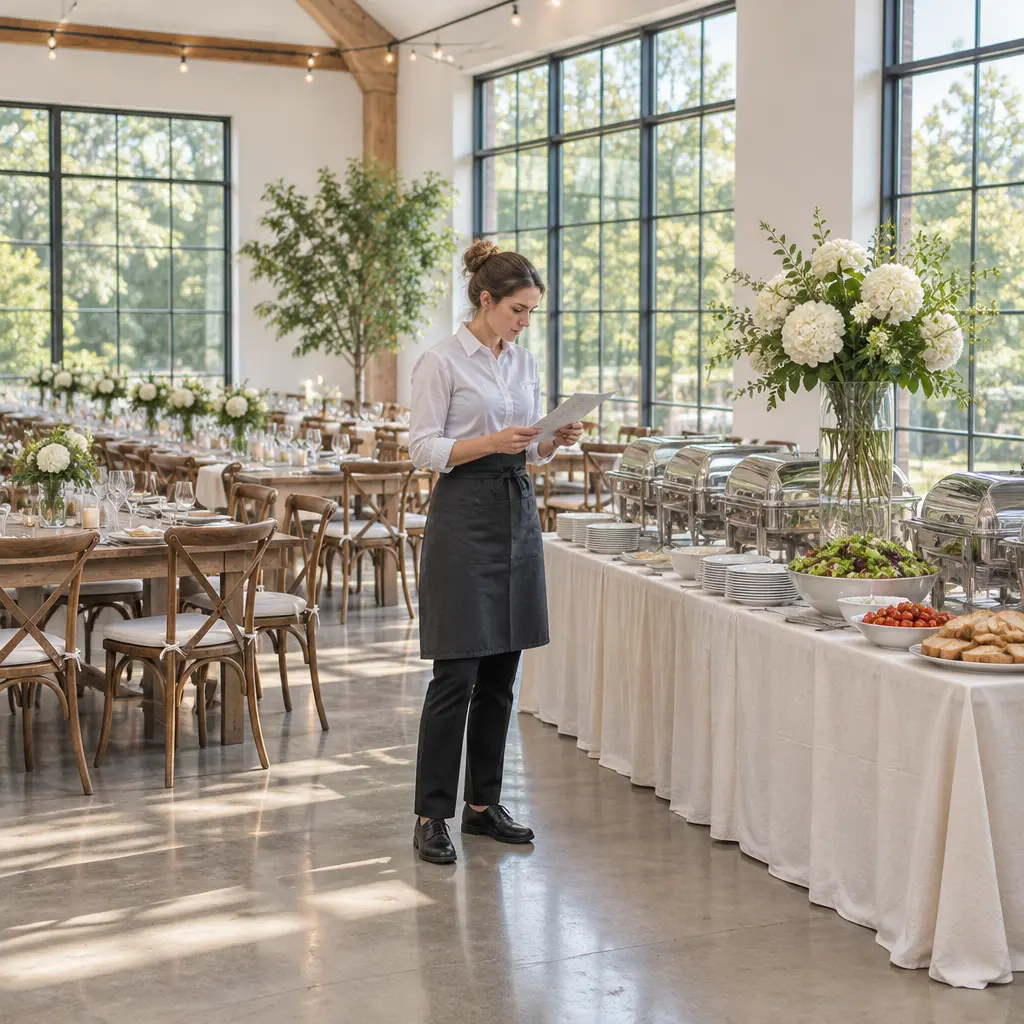
Wedding catering costs can fall without sacrificing the guest experience when couples adjust the menu, service style, guest count, and event timing rather than simply choosing lower-quality food. The Knot’s 2023 Real Weddings Study reported an average U.S. wedding catering cost of about $8,000, with substantial variation by location and guest count. Because catering combines food, labor, rentals, and service, savings come from making those elements work together: prioritize a few memorable dishes, choose efficient service, reduce waste, and ask vendors for clear, comparable proposals.
Catering cost control preserves wedding meal quality
Catering cost control means managing the total expense of feeding and serving wedding guests while retaining the meal’s safety, flavor, presentation, and hospitality. The U.S. Small Business Administration’s general budgeting guidance emphasizes planning expenses and comparing costs; for wedding planning, that principle translates into assessing the full per-person price rather than the menu price alone. A quoted meal may also involve staffing, delivery, rentals, taxes, service charges, and setup.
The best approach is to protect the parts guests notice most—well-prepared food, enough to eat, and attentive service—while simplifying less important extras. Consider savings in four connected areas: guest count and timing, menu design, service format, and vendor negotiation. A useful comparison chart can list each proposal’s food, labor, rentals, fees, and estimated total so that lower prices are not mistaken for lower-quality value.
Set a per-guest target and compare complete proposals
A per-guest budget is the planned catering spend divided by the number of people expected to attend. It provides a practical baseline, but couples should confirm what the figure includes: some proposals quote food only, while others bundle staffing, equipment, or service. Request an itemized estimate and ask whether the final bill is calculated from the confirmed guest count, a minimum spend, or both.
Compare like with like. For each caterer, record the same meal format, service period, guest count, dietary requirements, and rental assumptions. The Knot’s wedding-cost reporting is useful as a broad benchmark, not a local quote: venue, season, and regional labor costs can produce very different totals. Use local proposals to make the decision.
Trim the guest list thoughtfully
Guest count is a direct cost lever because each additional person may require food, drinks, place settings, and service. The actual savings depend on the contract: some costs are variable per person, while venue minimums and fixed labor charges may remain unchanged. Confirm the caterer’s final-count deadline and the fee for late additions before relying on head-count reductions.
If reducing invitations is appropriate, apply the same rule consistently across both sides of the family and friend groups. A smaller celebration can also make it easier to offer more attentive service or a higher-quality dish without increasing the overall budget.
Menu planning lowers catering costs without sacrificing flavor
Menu planning controls ingredient and preparation costs by choosing dishes that suit the season, venue, guest preferences, and kitchen setup. It is not simply a matter of selecting the cheapest ingredients: a focused menu with well-executed dishes can feel more considered than a long menu with uneven quality. The USDA’s seasonal produce guidance explains that availability varies by crop and region, so couples can ask caterers which locally available ingredients are practical for their wedding date.
Choose seasonal ingredients and a focused menu
Seasonal menu design uses ingredients that are readily available around the wedding date. Availability can affect price and freshness, although local growing conditions and supplier contracts matter. Ask the caterer to suggest seasonal vegetables, fruit, and garnishes, then build the menu around a few strong dishes rather than adding multiple costly alternatives.
A focused menu can still accommodate guests well. Offer a satisfying main course, complementary sides, and a clearly identified vegetarian or other dietary option. Confirm that the caterer can prevent cross-contact where required and can label dishes accurately. Dietary accommodation should be planned with the vendor, not treated as an afterthought.
Use a signature dish and sensible substitutions
A signature dish is a distinctive, memorable item that gives the meal personality without requiring a large number of premium courses. Couples might feature a regional specialty, family recipe, or chef-prepared seasonal entrée, then keep the remaining choices simpler. Ask whether a less expensive cut, preparation method, or side can deliver a similar flavor and presentation.
Substitutions should be evaluated through a tasting or a clear description of ingredients and preparation. The goal is not to hide a downgrade but to find a dish that is flavorful, suitable for the event’s equipment, and priced transparently. Discuss portion size as well: generous but appropriate servings can help avoid both shortages and unnecessary leftovers.
Reduce food waste through accurate planning
Food-waste reduction means matching production and service to likely consumption while maintaining a safe buffer. The U.S. Environmental Protection Agency identifies food as a major component of municipal solid waste and recommends preventing waste as a priority. For a wedding, useful steps include collecting reliable RSVPs, confirming dietary needs, choosing a realistic service window, and asking the caterer how portions are calculated.
Do not reduce quantities below safe service levels just to lower the estimate. Instead, ask the caterer which dishes are typically overproduced, whether a smaller but replenished buffet is feasible, and how remaining food can be handled safely. Food donation or take-home plans must follow local food-safety rules and the venue’s policies.
Service style changes wedding catering expenses
Service style describes how food reaches guests and how much staffing and equipment are needed. It affects labor, rentals, guest flow, and the overall feel of the reception. No format is automatically cheapest: venue layout, menu complexity, staffing rules, and rental requirements can outweigh apparent differences. Ask for a complete cost comparison based on the same menu and guest count.
Compare plated, buffet, family-style, and stations
Plated service delivers courses to seated guests and can create a formal experience, but it requires advance meal selections and coordinated service. Buffet service lets guests choose from a spread and may reduce some table-side work, though it can require additional food, serving equipment, attendants, and queue management. Family-style service places shared platters on tables, which can feel communal but may require more serving pieces and table space. Stations divide food among serving points and can encourage variety, but multiple stations may increase setup and staffing needs.
Ask the caterer to price each suitable format, including attendants, rentals, and service time. Consider guest mobility and accessibility, too: efficient service should not create long lines or make food difficult to reach.
Simplify rentals and table service
Rental costs cover items such as plates, glassware, cutlery, linens, and serving equipment. A venue may already include some of these, while a caterer may charge for delivery, setup, cleaning, or replacement. Confirm exactly what is supplied before renting duplicates.
A restrained table plan can reduce rental complexity without making the reception feel bare. Ask whether the chosen service style needs every piece of formal tableware, and check that any alternative materials meet venue, food-safety, and waste-management requirements. Keep presentation intentional by investing in a few coordinated details rather than layering on costly extras.
Choose timing that fits the meal
Event timing influences what guests expect to be served. A reception scheduled across a typical dinner period calls for a substantial meal; an afternoon event outside normal meal hours may support a lighter menu, provided invitations and the schedule set clear expectations. The timing can also affect staffing duration, overtime, and venue access charges.
Confirm service windows and overtime rates in writing. If the reception runs long, the caterer may charge for additional labor or equipment use, so a realistic timeline can prevent avoidable fees while keeping guests comfortable.
Vendor negotiations make catering proposals more transparent
Vendor negotiation is the process of clarifying scope and agreeing on a service plan that fits the budget and quality requirements. It works best as a collaborative discussion, not as pressure to cut food safety, fair staffing, or agreed service standards. The Federal Trade Commission advises consumers to understand contract terms before committing; couples should apply the same care to catering proposals, amendments, deposits, cancellation provisions, and payment schedules.
Ask for itemized pricing and disclose fees
An itemized proposal separates food, labor, rentals, delivery, setup, taxes, and service or administrative charges. Ask which amounts are fixed, which vary with attendance, and whether a service charge is a gratuity or an operational fee. The contract should explain payment deadlines, final guest-count rules, overtime rates, and what happens if the event schedule changes.
Compare final estimated totals, not just advertised per-person prices. A lower base price may not be the better value if it excludes essentials or has a higher minimum. Request written clarification for any ambiguous line item before signing.
Ask about off-peak dates and package flexibility
Some caterers may offer different pricing or greater availability on less-demanded dates, times, or seasons. This varies by market and vendor, so treat it as a question rather than an assumed discount. Ask whether a weekday, brunch, lunch, or off-season reception changes the menu minimum, staffing, or rental requirements.
Package flexibility can also produce savings. Ask whether you can remove an unused course, simplify the cocktail-hour spread, or substitute a beverage option without losing essential service. Keep all agreed changes in the signed proposal so the final invoice reflects the actual plan.
Coordinate venue, caterer, and beverage arrangements
Coordination prevents duplicate charges and last-minute surprises. Ask the venue what kitchen access, tables, refrigeration, glassware, cleanup, and staffing it provides, and ask the caterer which items remain necessary. Check venue rules on outside food, alcohol, bartenders, waste removal, and vendor insurance before planning alternatives.
Beverage service should be budgeted separately from food where possible. A limited selection, nonalcoholic options, or a hosted period followed by a cash bar may suit some celebrations, but choices should be clearly communicated to guests and permitted by the venue. Do not assume bringing your own drinks is cheaper until corkage, staffing, permits, and equipment are included.
A practical checklist protects quality and budget
Use this checklist to compare options and keep cost decisions grounded in guest experience:
- Set a total catering ceiling and a realistic guest-count range.
- Request itemized estimates from caterers using the same menu, service time, and assumptions.
- Identify the dishes and service details that matter most, then simplify lower-priority extras.
- Ask about seasonal ingredients, substitutions, portion planning, and dietary accommodations.
- Compare service styles only after including labor, rentals, setup, and guest-flow needs.
- Confirm venue inclusions, minimums, overtime charges, taxes, and service-fee definitions.
- Review the contract, tasting arrangements, final-count deadline, cancellation terms, and payment schedule.
- Plan safe handling of leftovers and verify any donation or take-home arrangements in advance.
Conclusion
Reducing wedding catering costs without cutting quality depends on making deliberate choices across the guest count, menu, service format, and vendor contract. A focused seasonal menu, realistic food quantities, a service style suited to the venue, and itemized proposals can protect both hospitality and budget. Start by identifying what guests will remember most, then ask caterers to show how each option affects the full price. For further planning, consult local caterers, venue policies, and food-safety guidance before finalizing the menu and contract.
Sources: The Knot, “The Knot Real Weddings Study,” https://www.theknot.com/content/average-wedding-cost; U.S. Department of Agriculture, Seasonal Produce Guide, https://snaped.fns.usda.gov/resources/nutrition-education-materials/seasonal-produce-guide; U.S. Environmental Protection Agency, “Wasted Food Scale,” https://www.epa.gov/sustainable-management-food/wasted-food-scale; Federal Trade Commission, “Warranties and Contracts,” https://consumer.ftc.gov/articles/warranties-and-contracts; U.S. Small Business Administration, “Manage your finances,” https://www.sba.gov/business-guide/manage-your-business/manage-your-finances.
