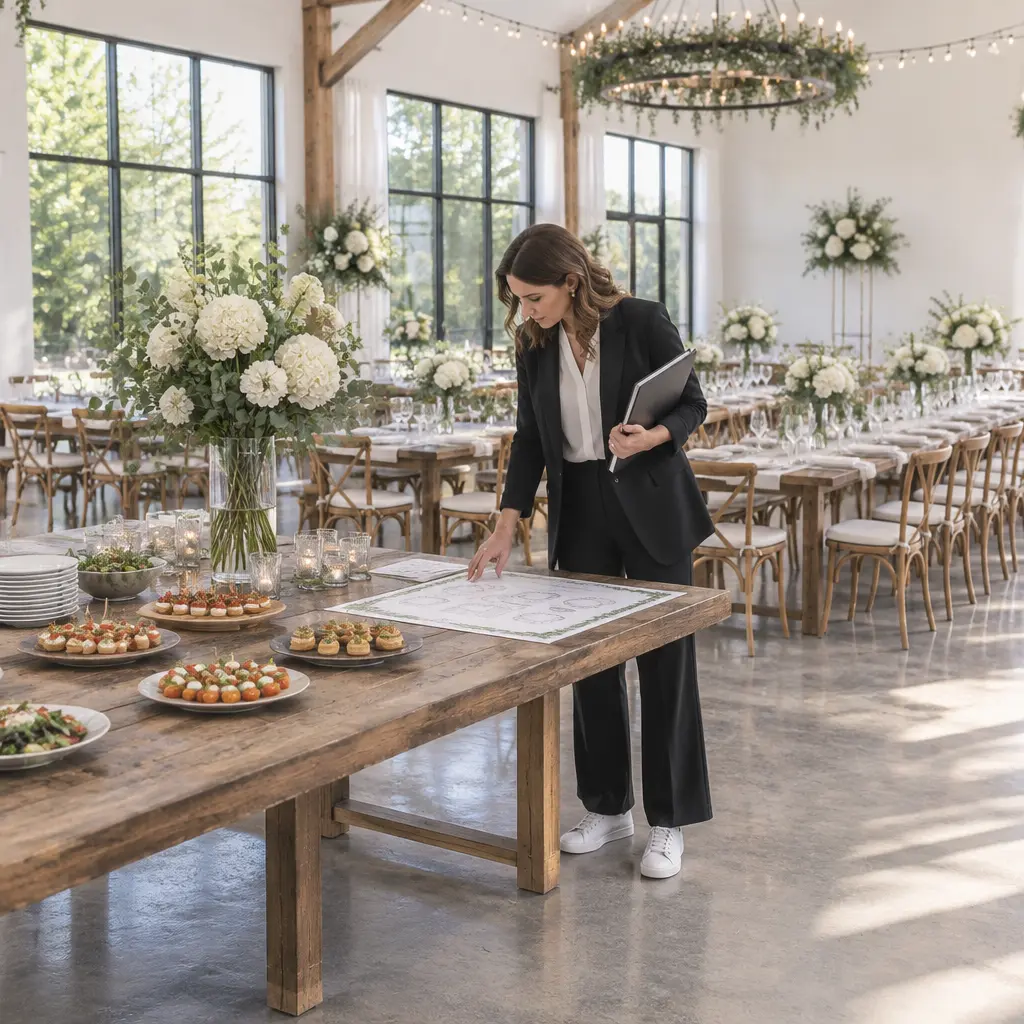
A wedding menu is the food and drink plan for a reception, shaped by the number of guests, their dietary needs, the event format, and the couple’s budget. The most reliable way to plan one is to set a per-person spending limit, collect meal requirements early, and choose a service style and menu that fit both the guest list and venue. That approach matters because food and beverage are among the major wedding expenses: The Knot’s 2024 Real Weddings Study reported an average U.S. wedding cost of $33,000 in 2023, with catering commonly accounting for a substantial share of reception spending. A practical plan starts with a realistic guest count, compares plated, buffet, and family-style service, and leaves room for taxes, service charges, and special meals.
Wedding menu planning and guest-list budgeting
Wedding menu planning is the process of matching food, beverages, service, and meal timing to the people attending and the amount available to spend. The U.S. Small Business Administration’s general budgeting guidance emphasizes estimating costs and tracking spending against a plan; couples can apply the same discipline by setting a catering ceiling before choosing dishes. A useful starting calculation is the total food-and-beverage budget divided by the expected number of guests, while remembering that the final invoice may also include staffing, rentals, taxes, and service fees.
The guest list affects more than the number of portions. It influences the range of dietary accommodations, the pace of service, the amount of seating and equipment required, and whether a menu should be broadly familiar or more adventurous. As a bridge from planning to menu selection, estimate attendance and guest needs first; then compare service formats and food choices against the same budget.
Build a dependable headcount
A headcount is the number of guests expected to attend, refined through invitations and RSVPs. Start with the invitation list, then update the working number as responses arrive. Ask the venue or caterer when they require the guaranteed count and how late changes are accepted. Do not assume that every invitee will attend or that every RSVP will arrive on time; use the vendor’s contract terms to decide how much contingency to hold.
Separate adults, children, vendors, and any guests who need a different meal if the caterer prices them differently. Confirm whether the couple must provide meals for photographers, musicians, or other working vendors. This prevents a common budget surprise: paying for meals that were not included in the initial guest estimate.
Set the true per-person budget
A per-person estimate is a comparison tool, not necessarily the caterer’s final price. Ask for an itemized proposal that distinguishes food, beverage packages, staffing, rentals, cake cutting, delivery, taxes, and service charges. The U.S. Bureau of Labor Statistics’ Consumer Expenditure Surveys track household spending categories such as food, but wedding catering costs vary substantially by location, venue, date, and service level; a national average cannot replace local quotes.
Keep a small reserve for guest-count changes and overlooked charges. If the budget is tight, adjust the service format, number of courses, or beverage offering before cutting portions or ignoring dietary needs. Compare proposals on the same basis—for example, the same guest count, bar duration, and included rentals—so the lowest headline price does not conceal extra costs.
Guest needs shape wedding menu choices
A guest-centered menu accounts for allergies, medical dietary requirements, religious practices, and personal preferences without treating every request as interchangeable. The U.S. Food and Drug Administration identifies nine major food allergens: milk, eggs, fish, crustacean shellfish, tree nuts, peanuts, wheat, soybeans, and sesame. That list is useful for awareness, but it does not cover every allergy or intolerance, so couples should provide a confidential way for guests to disclose needs and share the information with the caterer.
The goal is not to collect unnecessary personal details. Ask guests to identify a dietary requirement and any relevant safety concern, then confirm directly with the caterer how meals will be prepared and served. With needs documented, the next step is to translate them into choices that remain clear, safe, and manageable at the event.
Account for allergies and food safety
An allergy is an immune-system reaction to a food; an intolerance generally causes digestive or other symptoms without the same immune response. For serious allergies, a menu label alone may not be enough. Ask the caterer about ingredient verification, separate preparation areas and utensils, cross-contact controls, and how staff will identify and deliver special plates. The FDA stresses that consumers with food allergies need reliable ingredient information; wedding hosts should therefore avoid promising an allergen-free meal unless the caterer can substantiate that claim.
Use clear meal codes or discreet place cards, and ensure the serving team knows who receives each special meal. Confirm whether sauces, garnishes, bread, and desserts contain ingredients that differ from the main dish. These operational details turn a dietary note into a usable service plan.
Include religious, cultural, and plant-based meals
Religious and cultural food practices can affect ingredients, preparation, and timing. Examples include halal or kosher meals, avoiding pork or beef, and vegetarian or vegan diets. Requirements differ among individuals and communities, so ask guests what they need rather than making assumptions based on identity. If certification or specific preparation standards matter, verify whether the caterer can meet them and whether meals must come from an approved provider.
A well-designed menu can offer inclusive choices as part of the main selection, such as a substantial vegetarian entrée available to anyone. This can reduce the need for guests to feel singled out and may simplify service. When special meals are necessary, include them in the guaranteed count and confirm their delivery process with the venue.
Match portions and menu variety to the event
Menu variety means offering enough choice to accommodate guests while keeping purchasing and service practical. A smaller, coherent selection may be easier to execute than many competing entrées. Ask the caterer to recommend portion sizes based on the reception schedule, meal format, and whether appetizers, dessert, or late-night food will also be served.
Timing matters: guests arriving after a long ceremony may need substantial food, while a short afternoon reception may call for lighter service. The U.S. Department of Agriculture’s food-safety guidance recommends keeping perishable food out of the temperature danger zone; your caterer should manage safe holding and service times, especially for outdoor or extended receptions. Confirm the plan for replenishing buffet food and removing items that have been held too long.
Wedding catering styles affect cost and service
Catering style is the method used to prepare and deliver food to guests. Common options include plated service, buffet service, family-style service, food stations, and cocktail-style receptions. Each changes staffing, equipment, guest movement, portion control, and the experience of the meal. There is no universally cheapest choice: a caterer’s quote depends on the menu, venue logistics, labor, rentals, and local pricing.
To compare formats fairly, ask each vendor to price the same menu scope and guest count, and clarify what is included. Once the service method is chosen, couples can make menu adjustments that preserve the intended experience without allowing small additions to undermine the budget.
Plated dinners
Plated service delivers a selected meal to each guest at the table. It can create a structured reception and make portions predictable, but requires accurate meal selections, seating information, and coordinated service. Ask whether the quote includes multiple entrée choices, extra service staff, and a process for handling guests who change their selection or have an unreported dietary need.
Buffets and food stations
A buffet lets guests serve themselves from a shared line; food stations divide the offerings among separate serving points. These formats can provide variety and flexibility, but may require additional serving equipment, replenishment, and space. Ask how the caterer will prevent queues, label dishes, avoid cross-contact between foods, and maintain safe temperatures. A lower staffing estimate is not automatically a lower total cost if rentals or venue requirements add expense.
Family-style and cocktail-style receptions
Family-style service places shared dishes on each table, encouraging guests to pass food among themselves. It can feel communal, though it requires table space and enough food to serve the group. Cocktail-style service offers a series of small bites, sometimes with limited seating. It may suit a shorter or less formal event, but couples should confirm the number and substance of portions so guests understand whether the reception is a full meal.
A format should fit the guest list as well as the aesthetic. Consider mobility needs, age range, room layout, and how easily guests can reach food. For example, a buffet may be less convenient for guests who have difficulty standing in line; table service or staffed stations may offer a better experience.
A practical process for finalizing the menu
Once the guest requirements and service format are clear, turn them into a short decision process. The aim is to make choices in an order that limits expensive revisions: establish the budget, gather requirements, select the format, then approve dishes and confirm logistics.
Use a menu-planning checklist
- Set a maximum food-and-beverage budget and identify which fees are included.
- Estimate the guest count and record children, vendors, and special meal requests separately.
- Ask the caterer about allergy protocols, religious or cultural requirements, and plant-based options.
- Choose a service style that suits the venue, schedule, guest mobility, and desired atmosphere.
- Compare itemized proposals using the same guest count and service assumptions.
- Attend a tasting if available, then confirm ingredients, portion expectations, and substitutions in writing.
- Meet the vendor’s deadline for the guaranteed count and provide a final seating and special-meal list.
Find savings without compromising hospitality
Cost-conscious planning means reducing expense while retaining enough food, safe preparation, and a satisfying guest experience. Possible adjustments include choosing seasonal ingredients, limiting the number of entrée options, shortening the bar service, or serving a substantial meal at a time when guests expect one. Ask the caterer which changes would meaningfully reduce labor or ingredient costs; a seemingly small menu edit may not change the quote if staffing and equipment remain the same.
Avoid relying on an unverified assumption that guests will eat less or that a buffet will always cost less. Review the written proposal, ask about overtime and minimum charges, and confirm who supplies linens, plates, glassware, and serving equipment. These details make the final budget more dependable.
Illustrative example: a mixed-needs guest list
Consider a hypothetical reception for 100 guests with a fixed catering ceiling. The couple first asks for RSVPs to identify vegetarian meals, food allergies, and religious dietary requirements. They then request two comparable quotes—one for plated service and one for a buffet—each covering the same meal, beverages, staffing assumptions, and rental needs. If the buffet quote is lower but does not include additional equipment or allergy controls, the couple can compare the true totals rather than choosing from headline prices alone. This example is illustrative, not a report of a particular wedding or vendor price.
Conclusion: plan around people, then refine the menu
A successful wedding menu connects the guest count, dietary requirements, catering style, and budget in one workable plan. Start with a realistic headcount and an itemized spending limit; document allergies and religious, cultural, or plant-based needs; then compare service formats and vendor proposals on equal terms. Confirm ingredients, portion expectations, food-safety procedures, fees, and final-count deadlines in writing.
Thoughtful menu planning is both a hospitality decision and a budget decision: it helps guests feel considered while reducing last-minute changes and avoidable costs. Before booking, review the caterer’s detailed proposal, share requirements securely, and ask the venue how meals will be labeled, served, and kept safe.
Sources: The Knot, “2024 Real Weddings Study,” https://www.theknot.com/content/average-wedding-cost; U.S. Small Business Administration, “Manage Your Finances,” https://www.sba.gov/business-guide/manage-your-business/manage-your-finances; U.S. Bureau of Labor Statistics, “Consumer Expenditures,” https://www.bls.gov/cex/; U.S. Food and Drug Administration, “Food Allergies,” https://www.fda.gov/food/food-labeling-nutrition/food-allergies; U.S. Department of Agriculture, Food Safety and Inspection Service, “Keep Food Safe! Food Safety Basics,” https://www.fsis.usda.gov/food-safety/safe-food-handling-and-preparation/food-safety-basics/keep-food-safe-food-safety-basics.